
Few topics start an argument in Ventura County faster than new development.
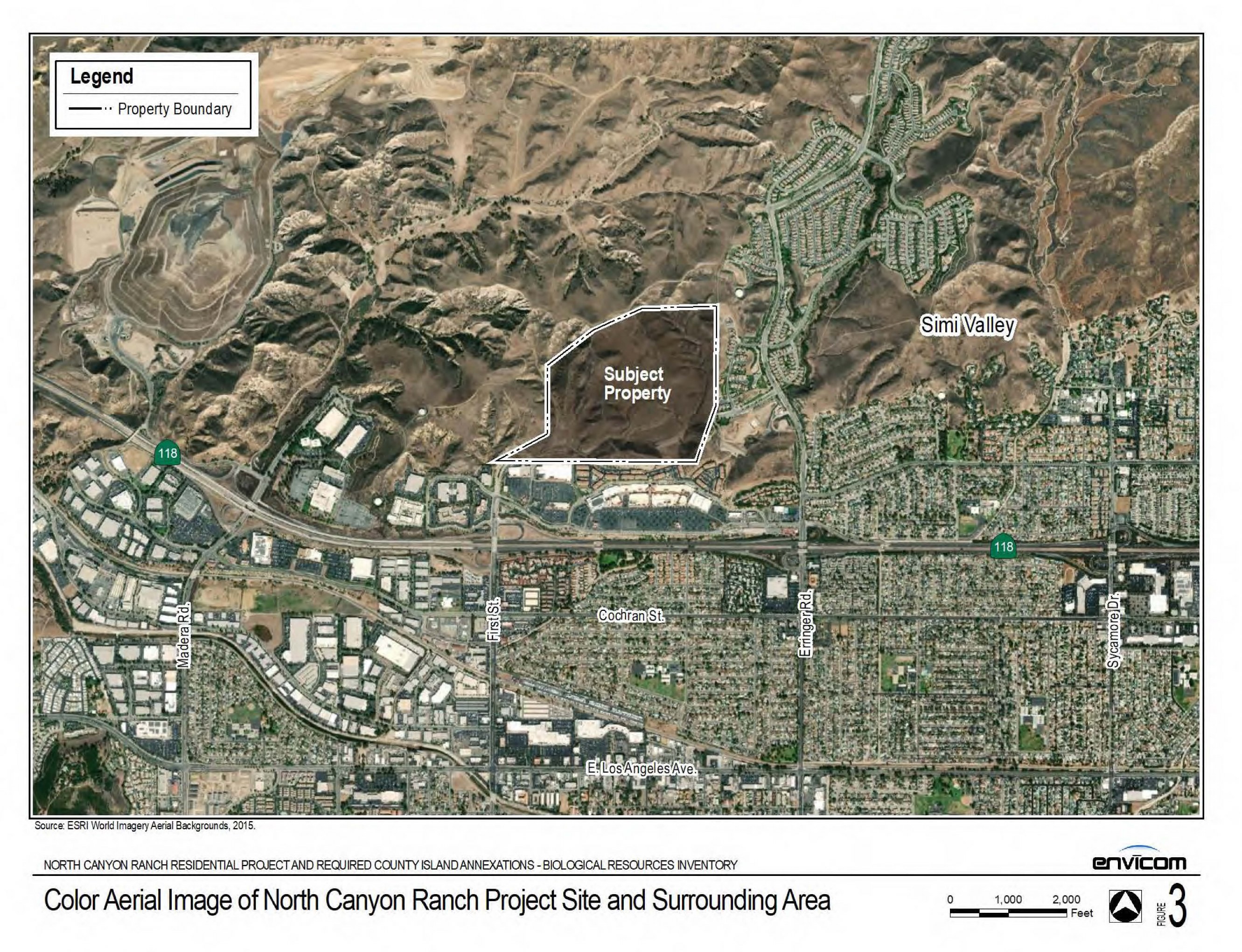
On November 9, the Simi Valley City Council voted 4-1 to annex 302 acres and approve a 207-home development called North Canyon Ranch, on the hills north of the Simi Valley Town Center. The Ventura County Star reported the vote and the project details here.
People have strong feelings about it, in both directions. I am not writing to settle that argument. I am a broker, not a council member — but my clients ask me what growth means for their homes, so I got curious and looked at the numbers.
Is Simi Valley actually building more than the rest of Ventura County? The honest answer is more interesting than yes or no.
What did the council approve?
The vote does two things. It annexes seven unincorporated “County Island” neighborhoods into the city — something the county’s Local Agency Formation Commission (LAFCo) had already required with the city’s next annexation — and it approves a new neighborhood on a vacant 160-acre site at the city’s northwest edge, east of First Street and west of Big Sky Ranch:
- 157 single-family homes
- 50 multi-family townhomes — possibly senior housing; the builder who buys the project will decide
- About 70 acres left as open space
One step remains before any of it is final: LAFCo has the last word on the annexations, and city staff expects that decision in 2027.
Does Simi Valley build more than its neighbors?
By total volume, no — and it is worth saying so plainly.
According to SCAG’s 2025 economic update for Ventura County, Oxnard and Camarillo led all ten cities in the county in new housing starts through 2024, and in 2025 those two plus Santa Paula permitted nearly all of the county’s new apartment units. Countywide, about 7 in 10 homes permitted in 2024 were in multi-family buildings (U.S. Census Bureau). Oxnard alone permitted more homes in 2025 than this entire Simi Valley project contains, several times over.
Measured a different way — against the housing target the state assigned each city for 2021–2029 — Simi Valley sits in the county’s upper half. It has permitted about 49% of its 2,793-unit target. Camarillo is ahead, at roughly 63%. Thousand Oaks is near 25%, and Oxnard about 24% of a much larger target. (Fair Housing Elements Progress Tracker, from cities’ state filings.)
So Simi Valley is not the county’s biggest builder. What stands out is the kind of project it approved: a large, mostly single-family neighborhood — the type of development that has become rare in Ventura County.
What made this one possible?
Three things, as far as the record shows.
The land was inside the lines voters already drew. Simi Valley’s own SOAR measure, approved by voters in 1998, set a City Urban Restriction Boundary — growth beyond it requires a public vote. The North Canyon Ranch site sits inside that boundary and inside the city’s sphere of influence. The council could approve it without asking voters to move the line.
It was twenty years in the making. The developer, SVJV Partners, has worked on this project for about two decades. Soil from the Town Center’s construction was placed on the site years ago, and drainage basins were built then. Whatever one thinks of the outcome, it was not a rushed decision.
The demand is real. Simi Valley grew as a bedroom community for Los Angeles and the San Fernando Valley — the 118 freeway and the Metrolink line see to that — and its rental vacancy rate runs about 2%. Its median sale price, about $809,000 over the three months ending in October (Redfin), sits roughly $90,000 below the Ventura County median of $900,000 (California Association of Realtors, October 2026). Families priced out of other markets keep looking here.
What is each side saying?
Fairly stated, briefly:
Supporters point to the need for homes in a city of about 125,000 with only 281 homes for sale in late October; to roughly $6.7 million in fees for the city and about $1.5 million for the school district; and to the project’s fire design — a 200-foot fuel modification zone, sprinklers in every home, and a new First Street connection that gives Big Sky residents a second way out.
Opponents point to the location: a very high fire hazard zone in the hills, which is why Councilmember Joseph Ayala cast the lone no vote. Environmental speakers noted the site supports at least 99 wildlife species, including 25 special-status species. Island residents objected to being annexed at all, and one group flagged about 13 acres of farmland — including active orchard — inside the annexation area. Traffic and the changing character of the hills are part of the conversation too.
Both lists are real. Reasonable neighbors weigh them differently, and that is exactly why these votes are contested.
What does this mean if you are buying or selling in Simi Valley today?
Less than the headlines suggest, for now — and that cuts both ways.
These homes are years away. After LAFCo, a builder still has to buy the project, finish the design, and pass city design review. The city’s own estimate is that construction could be ready to start by fall 2029.
Today’s market is today’s market: homes selling at about 99% of asking price, in roughly 51 days, with a 3.6-month supply countywide. Simi Valley’s median price actually rose 1.4% over the past year while the county median slipped 5.0%.
In other words: do not price a 2026 listing against 2029 homes, and do not wait to buy in hopes of them either. What this vote changes is the outlook — a signal about whether this city intends to add homes at all, and where.
My take
I notice, in my work, which cities are finding ways to add homes inside the boundaries their own voters set, and which are not — because buyers feel that difference in what they can choose from. Simi Valley’s vote is one data point, argued over for good reasons on both sides, and worth watching as it goes to LAFCo next.
If you want to know what your own home is worth in the market that exists today, you can start with a free home evaluation at jorgedeleon.com/evaluation. No pressure — just clear numbers.
The best decisions in real estate are made early, with clear information.
Jorge N. DeLeon, GRI, ABR, CRB, C2EX
The DeLeon Group | Brokered by eXp Realty
805-790-0020 | jorge.deleon@exprealty.com
Sources: Ventura County Star, November 18, 2026; SCAG 2025 Southern California Economic Update (Ventura County); U.S. Census Bureau Building Permits Survey; Fair Housing Elements Progress Tracker (HCD data); Redfin (three months ending October 2026); California Association of Realtors, October 2026. This article is for general information and is not legal, tax, or financial advice.